|
Oil
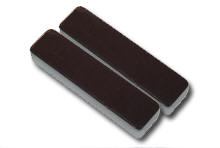
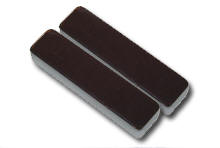
Filter Magnet
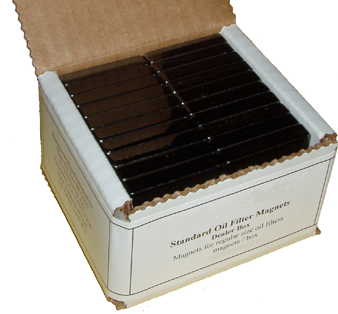
"Consumer Kit" #80-1144-C10
Magnets are available for consumers
that do their own oil changes or want to take them personally to a technician
for installation.
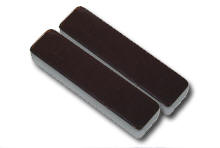
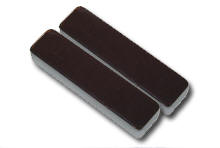
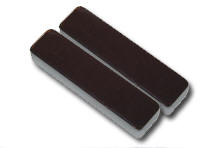
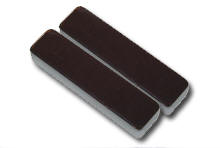
Custom packaged 10 Oil Filter Magnets and simple instructions
Order part number... #80-1144-C10
Cost is just $19.95
(Plus a small shipping charge)
Call GWR at 1(800) 266-4497
(Order Desk is open from 2pm to 8pm
EST)
|
Wait, isn't it better
to put a big wrap around magnet on my oil filter ???
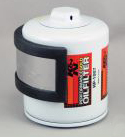
Well if you're comparing
an expensive wrap around oil filter magnet to our patented internal
magnets, please consider this. |
| |
|
FACT: If you
wrap their bulky, heavy Filter Magnet around your cartridge,
you will pull tons of metal out of your oil. |
| |
|
SPOILER ALERT... |
|
The media
paper in your oil filter could have done the same job for free!
|
|
Yikes! You just spent $50
on their fancy looking magnet for nothing.
|
| |
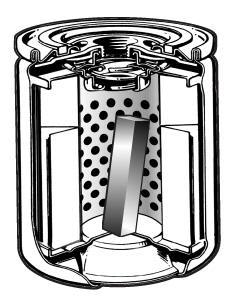
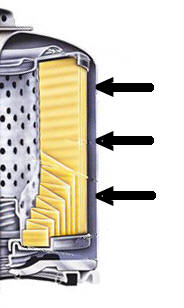
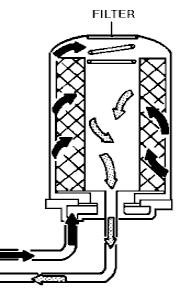
Let's take a look
at the center picture, a cut open oil filter
wrapped in an external Filter Magnet type product.
Where is all the loose metal deposited?
On the walls, you say...
Looks right, you say.
|
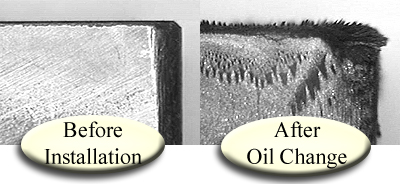
You are being tricked by
these types of photos because they show the larger metal particles
that have not reached the oil filter element yet. Remember
that if you can see metal it is larger than 50 microns, so all of
those loose chips of metal would have been caught by the paper
media.
|
Truth is you should
never collect metal before it passes into and through the media.
What you want to collect with a magnet is any particles that are so
small, they go through the media! The ones that are 5, 10 or
15 microns, the ones the SAE documents discussed below say are responsible for
80% of your engines wear and breakdown.
|
A more important issue
is engineering! The wrap around products are in direct conflict with the
technical design an OE Filter manufacturer builds into their new products.
|
Note in the pictures above that oil
flows from the outside to the inside of the filter. Next note the
limited space between walls and media paper, it is extremely tight and
narrow.
|
Now note where the
ragged, rough large metal particles are deposited when external
wrapped magnet systems are used. They all
end up in nice little rows along the inner wall of the filter's
metal shell. Well those walls are factory finished with high
tech paint like coatings that seal and smoothes the raw steel, so it is
a virtually zero friction component.
FACT: The faster and easier the oil flows up the side wall
and then into the paper media, the less Horse Power (ie Gasoline) it
takes to push the oil through lubrication system.
|
The last thing you or
the filter manufacturer wants is a rough surface on the inside of
that can, it just does not make good sense on any level. Let
the filter do its job of removing larger particles and then let our
Ceramic Oil Filter Magnets clean up what the spin-on unit misses...
it's a winning combo! |
Call GWR at 1(800) 266-4497
(Order Desk is open from 2pm to 8pm
EST)
For the techies in
the group... here is what you are looking for!
SOME IMPORTANT TEST
RESULTS
* SAE Technical Papers: 881827, 881825, 952555
& Additional Scientific Studies
Lube oil contamination accounts for seventy to eighty percent of all failures
and wear problems. The wear process promoted by oil contamination leads to
diminished fuel efficiency, shorter useful oil service life,
increased engine down time, reduced component life, loss of engine
performance, and an overall increase in operating costs.
Contaminant particles responsible for this damage are in the size range of
the dynamic lubricant films separating moving engine component surfaces... 10
microns and smaller. Typically these particles pass through the oil filter
and continue to build up in the oil system. By making simultaneous contact with
opposing surfaces these harmful particles focus the load onto a small area,
degrading the surface and perpetuating a chain-reaction-of-wear.
There are three categories of oil contaminates active in the engine wear
process:
1. Solid particles, including wear debris and soot, which damage mechanical
components and catalyze lubricant breakdown;
2. Liquid contaminates, including fuel and water, which corrode metals and
hinder the functioning of lubricants; and
3. Gaseous contaminants, including acidic combustion products, which corrode
component surfaces and degrade the oil.
The predominant harmful impurities in engine oil are metallic particles
and metal oxides. Typically there are well over 10,000 contaminant particles
per milliliter of lube oil. Furthermore, approximately 90% of these particles
are less than 10-microns in size. It's important to note that these
particles generate about 3.5-times more wear than particles greater than
10-microns in size. This wear occurs because these particles are the size
of, or slightly larger than the dynamic oil films separating opposing surfaces.
Numerous studies have established a number of important points regarding the
relationship between lube oil contamination and engine wear.
In the following SAE Paper 881827 substituting a standard 20-30 micron filter
with a 10-micron filter resulted in:
1. A reduced concentration of contaminant particles by a factor of 10-15
times;
2. A reduction in the four major wear metals monitored;
3. The filter was capable of operating more than twice the recommended service
life; and
4. The lube oil service life to be more than doubled without adverse engine wear
or lubricant degradation.
In summary, controlling particle contamination in the 1-10 micron size range
retards the chain-reaction-of-wear, resulting in significant reductions in
component wear and lubricant breakdown. The beneficial consequences include
greater component life and reliability, increased oil change intervals,
increased fuel efficiency, and a reduction in overall maintenance costs.
Diesel Component Wear Test on DDA 6V-53T Engine
(Performed by AC Delco Division of General Motors / GM)
Five critical component areas were tested:
1. Upper & Lower rod bearings.
2. Slipper bushings.
3. Compression & oil piston rings.
4. Piston rings.
5. The main bearings.
A. Diesel Engine Wear and Fuel Economy:
A study of twenty-two 6-cylindar diesel engines performed by Fodor & Ling
(affiliated with the Research Institute of Automotive Industry-Budapest and the
Rensselaer
Polytechnic Institute)
Conclusion: Control of particles in the 3-10 micron range had the greatest
affect in reducing engine wear.
It was found reducing contamination from 0.016% by weight (standard oil
filter) to 0.0025% by weight (extended filter / 10 micron control), reduced
engine wear by a factor of 14. Most significantly, oil friction was reduced by
2.9% compared to operating with clean oil. This reduction was equated to an
increase in fuel economy of about 4%. As a comparison, this significantly
exceeds the 0.6 - 0.9% fuel economy gain experienced when converting from SAE 40
to multi grade lube oil.
B. Survey of Diesel Engine Oil Contamination Levels
Samples of 138 engines operating with standard paper filter were compared to
117 engines operating with upgraded 10-micron filters.
Conclusions:
Based on the relationship difference between dynamic oil film and size of
wear generating particles, the most important particle size range is 0-10
microns.
1. Diesel engine lube oil contamination causes wear of engine components.
Wear of these components leads to loss of performance, increased maintenance and
overhaul cost, lower fuel efficiency, and shorter lube oil service life.
2. There is a fundamental relationship between the size of contaminate particles
and the thickness of the dynamic oil films developed between moving surfaces of
active components. Particles the size of, or smaller than, the oil film
thickness cause wear of components. By making simultaneous contact with both
surfaces, these particles focus the load onto a small region of the surface,
resulting in surface pitting, plowing, and cutting.
3. The average oil film thickness associated with the majority of diesel engine
components is in the 7 to 10 micron size domain. This is the size range of the
most damaging contaminant particles. In addition, mechanical stress is
accentuated during the high-load/thinner oil film phase of the engine cycle. In
order to minimize engine wear, emphasis must, therefore, be placed on
controlling particles in the 10-micron size domain and smaller.
4. Oil contamination causes component wear and in return, generates more
contamination. This is the chain-reaction-of-wear. If uncontrolled, this process
results in an enormous number of oil suspended particles. The consequences of
uncontrolled chain-reaction-of-wear are:
a) Higher friction, leading to high fuel consumption.
b) Loss of material from sliding and rolling contacts, resulting in
misalignment, vibration, and component replacement.
c) Opening of piston dynamic sealing surfaces, leading to loss of compression,
further fuel consumption, and contaminant ingestion from the environment.
d) The accumulation of soot and combustion products in the lube oil and the
formation of lubricant breakdown varnishes and sludge leading to reduced oil
service life.
5. The significance of proliferating particles in the 10-micron range domain
is phenomenal. Each grain of contaminant (wear debris, mineral grain,
metallic oxide) produces a small but finite amount of friction, abrasive wear,
and catalytic oil breakdown. Because of the vast number of harmful
particles, the total effect of this multitude is abbreviated oil life,
substantially higher engine friction, and propagation of engine wear
6. The benefits of controlling oil cleanliness levels to the order of 100-1000
particles /ml (10 times reduction) are:
a) An 8 to 14 times reduction in engine wear.
b) Up to 2 times increase in oil service life.
c) Up to 2 times increase in filter service life.
d) Up to 5% improvement in fuel economy.
The ultimate benefits are greater diesel engine performance over extended
life with lower operating cost.
Independent Laboratory Test by Titan Labs
The subject was a Peterbuilt engine (CAT C12) using a Premo LT-30P oil filter
system equipped with a 1.2 micron filter. A baseline test was performed at an
interval of 15,000 miles as indicated on the Analysis Report dated 4/11/01.
Ceramic Oil Filter Magnets were then inserted into the oil filter. After 15,000
miles, the second test was performed on 4/30/01. Please note the dynamic
improvement in ferrous particle reduction (in PPM), but also non-ferrous materials/contaminants
by the process of heterocoagulation.
Final column is percent of change from 1.2 Micron super filter system that costs
over $250 and is 25 times better than any standard street vehicle filter.
Tests conducted by:
Titan Laboratories, Denver, CO
Oil analysis report measuring parts per million (PPM), particle size 0.5
microns.
|
Elements
Tested
|
Ferrous* |
PPM "Before"
Oil Filter Magnet
|
PPM "After"
Oil Filter Magnet
|
Percentage
Reduction
|
| Boron |
Non |
3
|
2
|
33%
|
| Calcium |
Non |
2,929
|
2,870
|
2%
|
| Copper |
Non |
345
|
255
|
26%
|
| Iron |
|
57
|
13
|
77%
|
| Lead |
Non |
5
|
1
|
80%
|
| Magnesium |
Non |
14
|
2
|
86%
|
| Phosphorus |
Non |
1,533
|
1,104
|
28%
|
| Silicon |
Non |
40
|
8
|
80%
|
| Sodium |
Non |
264
|
37
|
86%
|
CHECK THIS OUT...
Even Non Ferrous (Non Magnetic) particulate are pulled in by our Oil Filter
Magnets!
The friction reduction improvement caused by removal of Ferrous plus Non
Ferrous (the total particulate count) is why you can improve fuel economy if you include an Oil Filter Magnet in
every oil change.
As demonstrated by SAE Technical Papers (listed above), the benefits of oil particle reduction
in the 10 micron range are:
An 8 to 14 times reduction in engine wear.
Up to 2 times increase in oil service life.
Up to 2 times increase in filter service life.
Up to 5% improvement in fuel economy.
The ultimate benefits are greater engine performance over extended life with
lower operating costs and higher resale value.
GWR Oil Filter Magnets can be added to virtually any oil filter and control
particle contamination down to 0.5-microns. This is a 20-times improvement in
particle control as compared to the SAE Technical Papers that indicate
substantial wear reduction and fuel improvement by control down to only 10 microns.
Companion product you will want to see....
Automotive
Link
to Fluid Analysis Systems
Another tip to save gasoline and tire
wear, be sure to put...
Nitrogen in tires
|